One angry comment shouldn't define a coach.
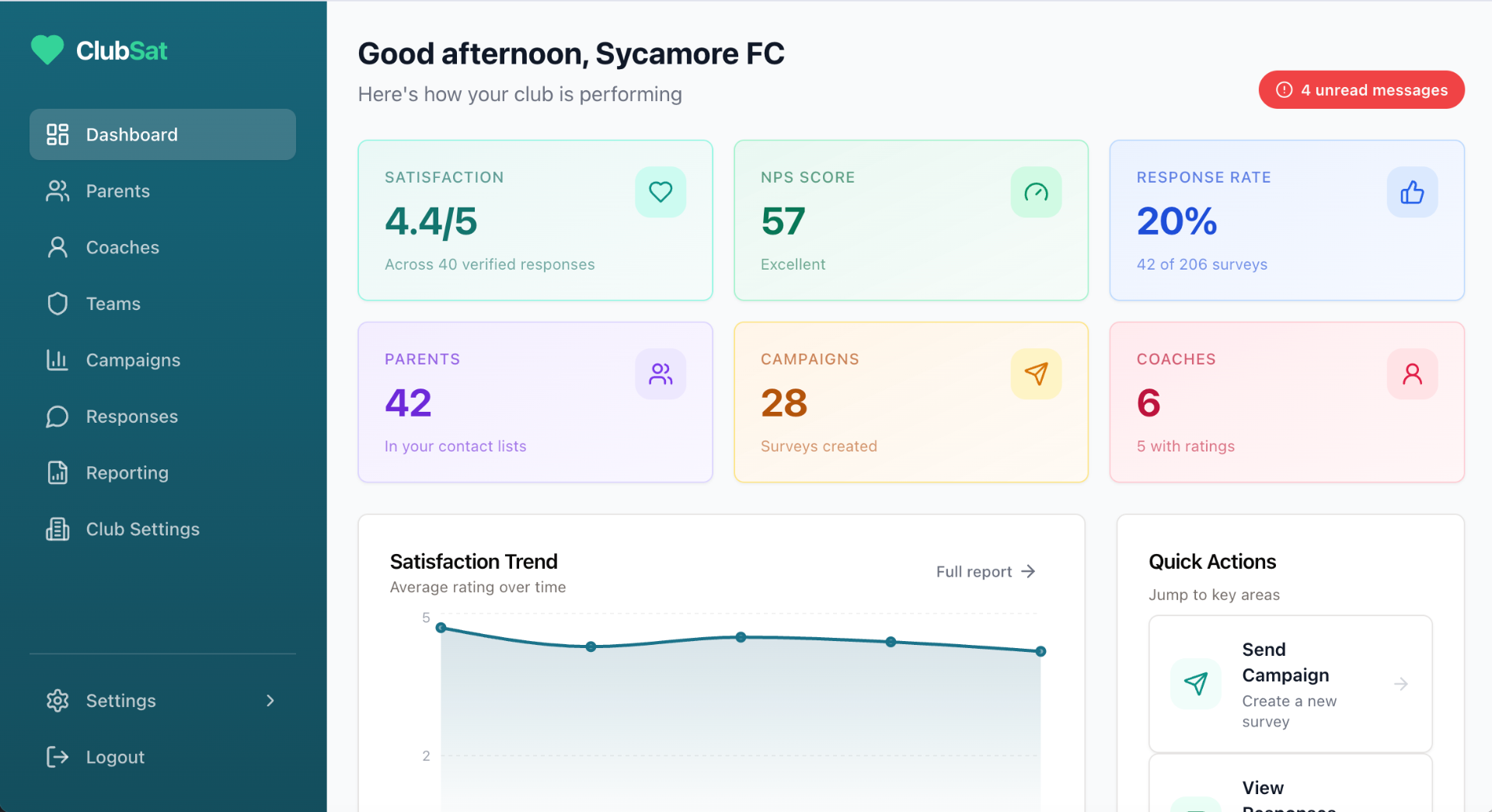
ClubSat looks at trends across a whole season, so you can tell the difference between a coach who needs development and a parent who is still mad about Saturday's game. You get the evidence to coach up the ones worth keeping, document the real problems, and protect young coaches from unfair criticism. Good coaches are the hardest thing in your club to replace.
Turn parent feedback into action and solutions.
Handle coaching feedback the right way.
Coach feedback is one of the most sensitive parts of running a youth sports club. Parents care deeply, coaches can feel exposed, and leadership often gets incomplete information—usually too late, and usually through the loudest voices. ClubSat makes coach feedback more fair and useful by collecting it in a consistent format, routing it to the right leaders, and turning it into trend-based insights you can act on. The goal isn't to create a "rating site" for coaches. It's to run a more professional club where coaching quality improves, player development is stronger, and families stay.
Who this is for
ClubSat coach feedback is built for competitive clubs and leagues that need a consistent way to see how every coach is doing on every team, before complaints boil over.
- Great coaches burning out from constant parent inbox management
- Feedback arriving as emotional side conversations instead of structured input
- Renewal-time surprises ("we didn't know families felt this way")
- Coaching directors struggling to see patterns across the whole club
- Coach turnover that disrupts teams and weakens player development
Why coach feedback breaks down
Most clubs don't lack feedback. They lack a system. That leads to:
- Parent concerns landing directly in coaches' inboxes and texts
- Inconsistent handling by team ("depends on the coach")
- Anecdotes driving decisions instead of patterns and trend data
- Escalations that happen late because no one owns follow-up
- Coaches feeling unsupported—and good coaches leaving for healthier environments
A better system improves coach experience and retention
Coaches want to coach. When they spend nights fielding complaints, managing expectations, and defending decisions over email, the job gets worse—and turnover rises. A professional feedback system helps by:
- Giving parents a clear place to share input that isn't the coach's personal inbox
- Routing issues to the right leader when they're operational or cultural (not training-related)
- Creating a consistent response process so coaches aren't improvising conflict management
- Protecting coach time and reducing emotional friction across the season
Better systems create a better coaching job. Better coaching jobs keep good coaches.
Coaching quality drives player development—and retention
Families may enroll for the badge, but they stay for the experience—especially player development. Coaching quality shows up in the things parents and players feel every week:
- Organized sessions and clear progression
- Honest communication about roles and expectations
- A positive culture that builds confidence
- Measurable development over the season
When coaching quality improves, player development improves. When players develop and families feel informed, they're happier—and renew at higher rates.
What good coach feedback looks like
A coach feedback process works when it's fair, repeatable, and focused on patterns—not one-off hot takes:
- Collected consistently across teams with the same questions
- Gathered during the season (not only pre-season)
- Centered on observable behaviors and expectations
- Routed to coaching leadership, not handled ad-hoc by the coach
- Tracked over time so you can see improvement or drift
- Connected to a follow-up process when issues need real intervention
What you can measure
Coach feedback is most useful when it covers the areas families actually experience:
- Communication clarity and responsiveness
- Training quality and organization
- Player development and appropriate challenge
- Professionalism, conduct, and culture
- Fairness perception and expectation setting
- Overall satisfaction with the coaching experience
How ClubSat helps
ClubSat combines surveys, messaging, and case management so clubs can:
- Run lightweight pulse surveys during the season for early signal
- Identify trend-level coaching insights without overreacting to one-off complaints
- Escalate serious issues into a structured workflow with clear ownership
- Document follow-up so coaches feel supported and leadership stays consistent
- Improve coaching quality over time—with fewer surprises and less churn
When coach feedback is structured and consistent, it becomes a tool for development—not conflict. Coaches get a better experience, great coaches stick around, player development improves, and families are far more likely to renew.
Ready to see it in action?
Join the clubs already using ClubSat to collect structured feedback, resolve issues faster, and strengthen their culture.
See How It WorksFree walkthrough · No commitment required
Frequently Asked Questions
How is coaching feedback collected?
Do coaches see individual responses?
How do you prevent coaching feedback from becoming personal attacks?
Can we use this for coach development?
Who manages the coaching feedback process?
Can we collect feedback for specific coaches or teams?
How often should we collect coaching feedback?
Ready to get started?
See how ClubSat can help your club manage coach feedback with a structured, scalable workflow.
See How It Works